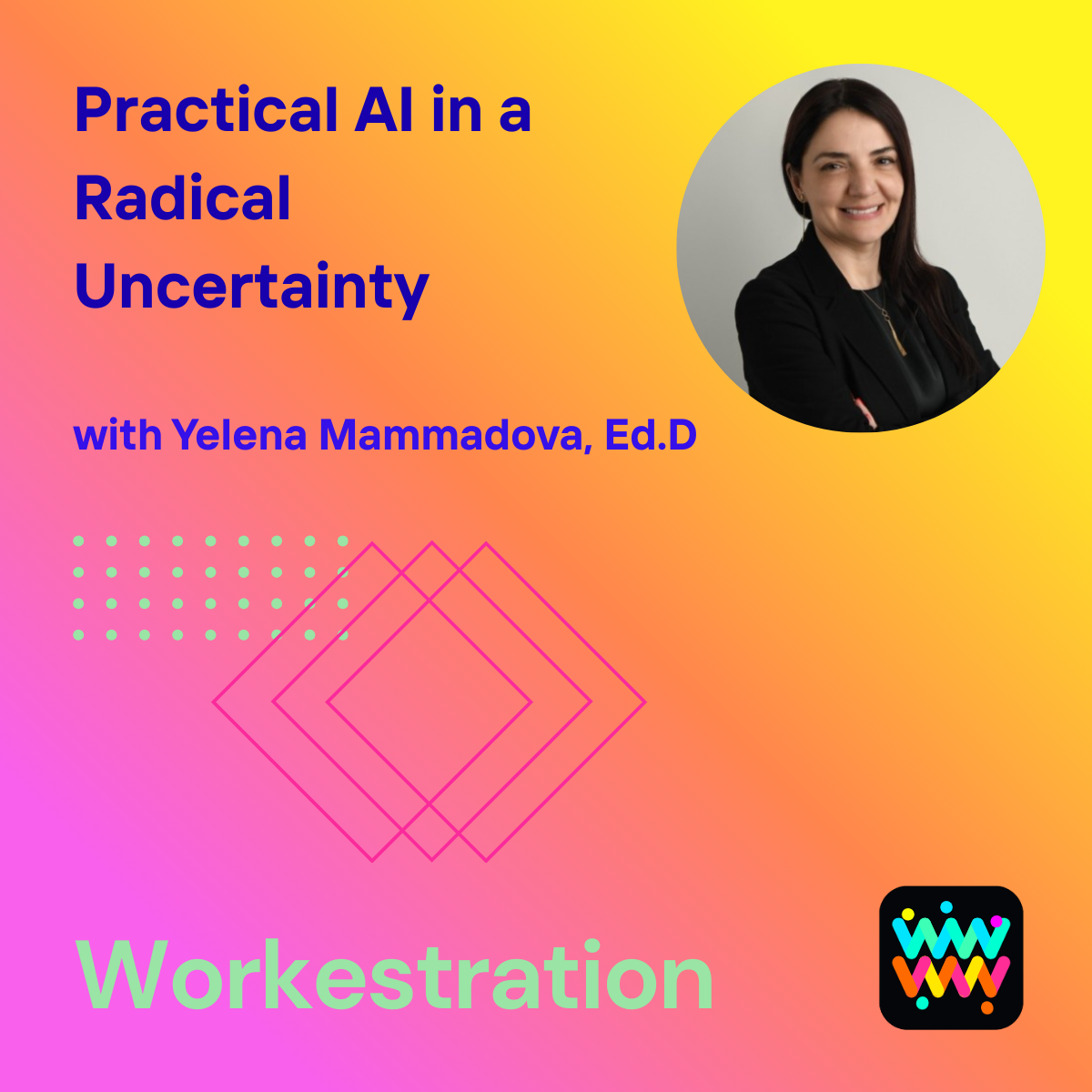
Beyond AI-Decorated: Building the AI-Powered Organization
The 2026 World Economic Forum in Davos centered on a concept that is currently reshaping the corporate world: "radical uncertainty". In a recent episode of the Workestration podcast, Yelena Mammadova, Ed.D, a product strategy leader at Microsoft, shared that the conversation around AI has moved past the hype and into a grounded, pragmatic era focused on real-world ROI and societal impact.
The primary challenge facing leaders today is the widening gap between technological advancement and human readiness. To bridge this, organizations must shift from being "AI-decorated" (simply adding tools to old workflows) to being truly "AI-powered" through deep process and work redesign.
The Role of HR: From Executor to the Transformation Itself
A big takeaway from Yelena’s insights is that HR is no longer just the implementer of change; HR is becoming the transformation itself. As AI begins to challenge the identity of workers at every level, including senior leadership, the role of HR is to drive "work redesign" and create a "safe space" for leaders to navigate this volatility with realism and calmness.
This aligns with broader industry trends. Note: Outside of the sources, research from firms like Gartner and McKinsey frequently highlights that "human-centric" design is the leading predictor of successful digital transformation. Yelena emphasizes that this is a cognitive and cultural transformation, not just a digital one.
The Science of Learning in AI Adoption
Drawing on her background in education, Yelena notes that AI adoption must be viewed through the lens of the science of learning. Handing an employee a tool is not enough; success requires:
- Context and Motivation: Employees must see how the tool solves their specific real-world problems to build trust.
- Managing Cognitive Load: The speed of AI development often outpaces human biological processing capabilities.
- Safe Experimentation: Leaders must foster an environment where "failing forward" is encouraged, allowing people the time and space to iterate with new tools.
From Talent Visibility to Talent Interpretation
One of the most powerful shifts AI enables is the move from "talent visibility" to "talent interpretation". Traditional HR systems focus on visible data like job titles and tenure. However, AI can now use inferred skills data deduced from work activity signals and project patterns to surface capabilities employees may not even realize they have.
Note: This mirrors research by Red Thread Research, which explores how skills tech landscapes are evolving to help organizations understand "adjacent" skills. By interpreting what a person is capable of doing next, organizations can engage in intentional talent mobility, saving millions in hiring costs while boosting employee morale.
Job Recomposition: The Unbundling of Work
A common fear is that AI will replace jobs. However, Yelena argues that we have overestimated job replacement and underestimated job recomposition. The real work for leaders today is "unbundling" roles to see which tasks can be reshaped or recombined.
This concept of "job recomposition" is supported by the work of economist Erik Brynjolfsson, who suggests that while few jobs will be fully automated, nearly every job will have some tasks impacted by AI. Yelena views AI as a "bicycle of the mind" - a tool that, like a bicycle, helps the human mind go further and faster, provided the human maintains critical thinking and oversight.
Moving Toward a Skills-Based Reality
While many organizations aspire to be "skills-based," legacy systems and "job-based muscle memory" remain significant hurdles. Becoming a skills-based organization is not about building a static taxonomy; it is an operating model shift that requires rethinking how we promote, assess, and match people to work.
To stay balanced on the "bicycle" of progress, organizations must prioritize transparency, user agency, and culture. As the podcast concludes, the goal is to move "onwards and forward," recognizing that the most important element of the AI era is, and will always be, the human.
Listen to the full episode here:
 Stela Lupushor