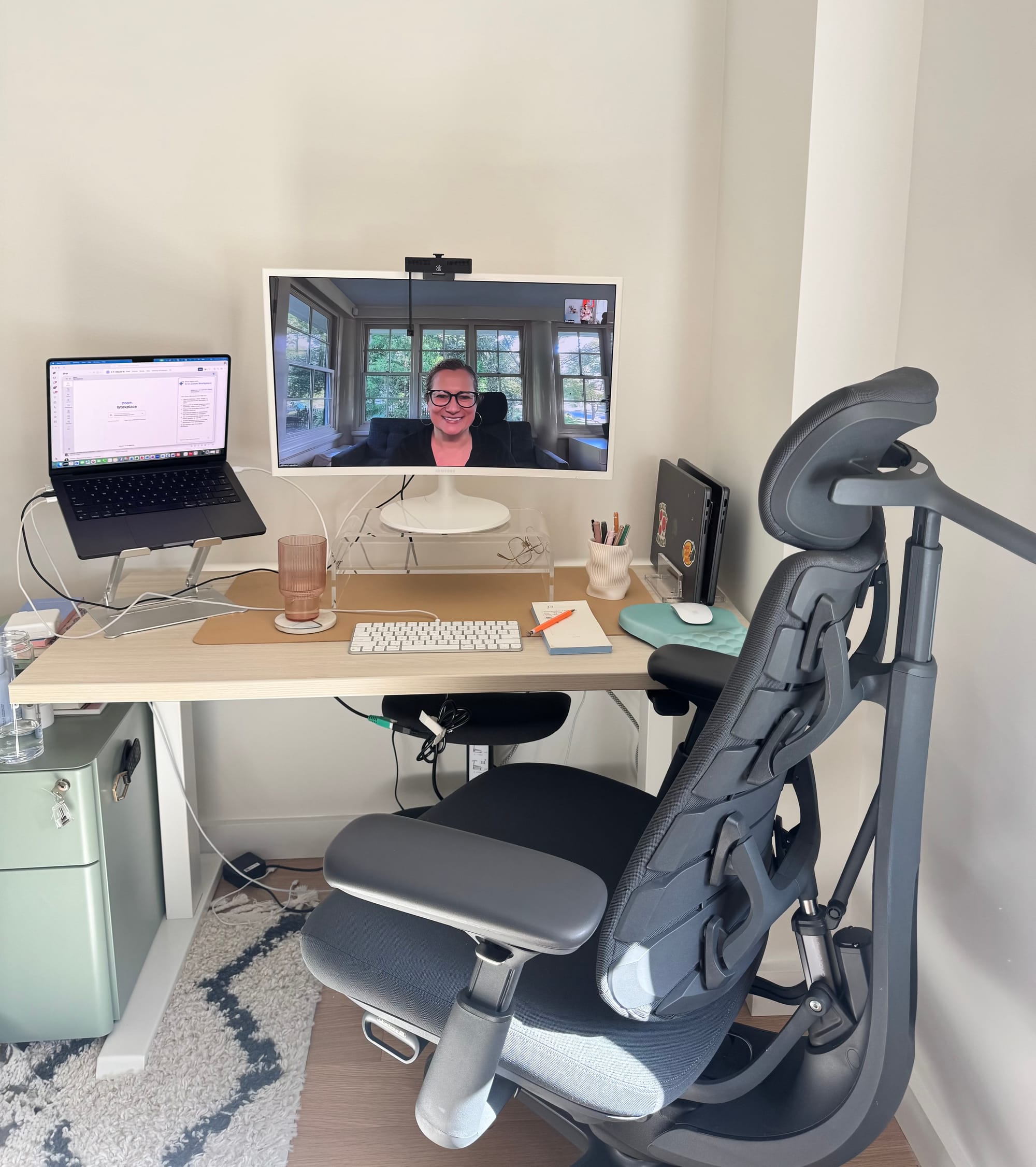
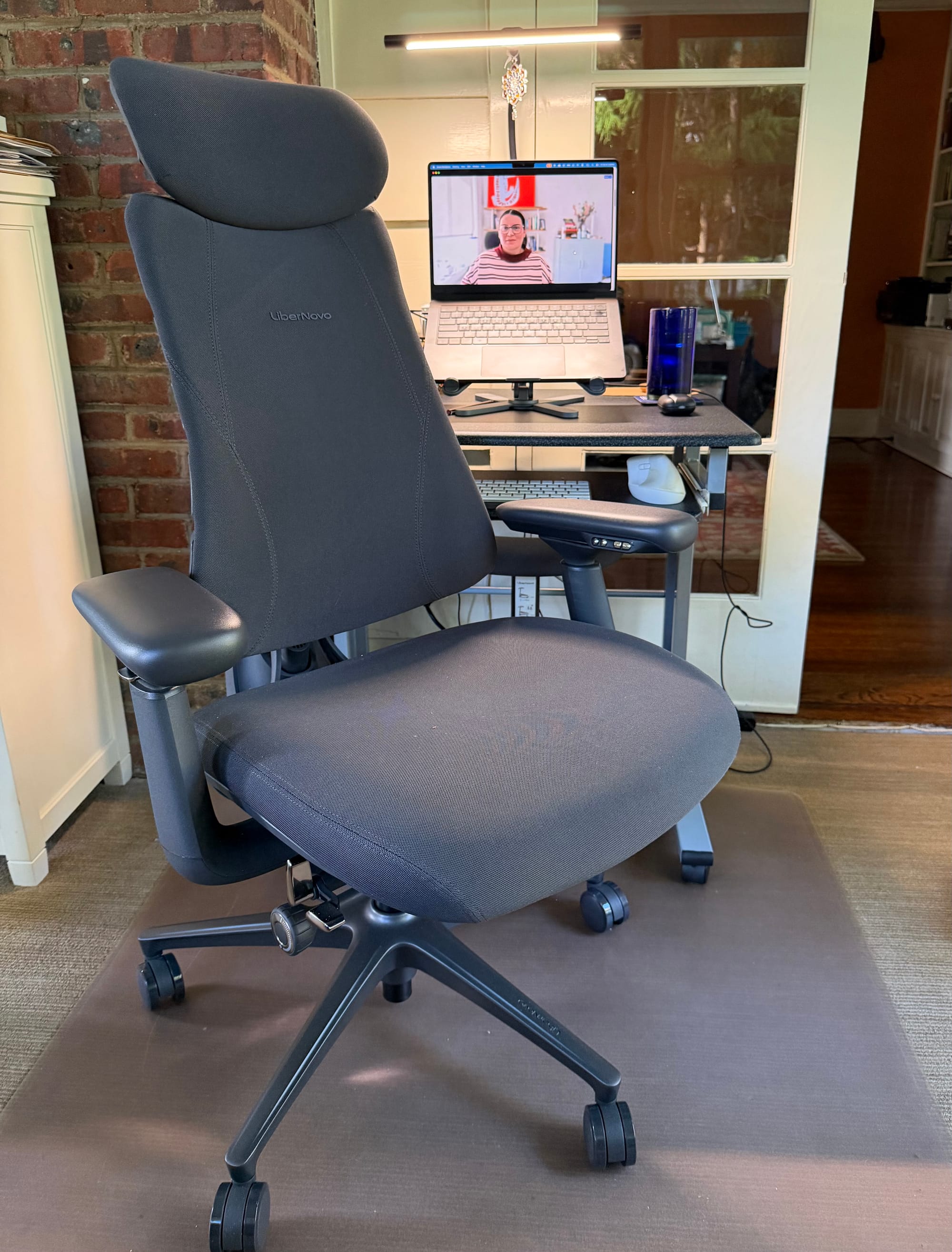
The pitch we said yes to (and the two things we’d fix)
Gifted by LiberNovo: LiberNovo gave us our chairs for free. They asked for honest feedback and didn’t ask us to say anything nice.
At some point this year Workestration crossed a threshold. We can’t say which one (a download count, a guest with a big following, an algorithm deciding we exist), but the inbox changed. Pitches now arrive daily: guests who’d be “perfect for your audience,” tools that will “transform how your listeners work,” sponsorship decks with rate cards attached. Most go straight to “review later” folder.
The LiberNovo email read differently. Lisa offered to send us chairs and asked what we thought of them. The agreement that followed says in writing that the company “does not require a positive statement” and that a review “need not be positive.” It also requires us to disclose that the chairs were free, which is what the FTC expects anyway. A brand that puts permission to criticize in its own contract has earned a fair test.
What works. Stela says the lumbar support is what she misses when she sits anywhere else. She didn’t expect to use the massage function daily… well, certainly not something you expect to do at work! The feature neither of us would give up is the air cooling. For Stela the reason is menopause. For Donna it’s pregnancy, and she says the chair has changed her posture more than anything else she’s tried. We’re two different bodies running hot for two different reasons, and the same switch helps both of us. Great example of good design!
What we’d change. Donna wishes the seat were a few inches wider so she could sit cross-legged in yogi pose, which is how plenty of people actually sit through a long recording (or back to back meetings.) Stela wants armrests that lock. Hers slide side to side and forward and back too freely, so when she leans on one to stand up or reach for something, it moves with her.
What the research says about the home office. Stela’s armrest complaint is a lucky one. In 2020, a team led by ergonomics researcher Kermit Davis surveyed 843 university employees who had been sent home. More than 40% reported moderate to severe discomfort, 85% worked mostly on laptops, and fewer than 45% had a chair with adjustable armrests at all (Work, 2021). Nine months later the team surveyed 1,135 people and found almost nothing had changed: 62% reported moderate to severe upper back and shoulder pain, 49% neck and head pain, and 45% low back pain (Work, 2022). Their recommendation to employers was that a laptop alone doesn’t make a workstation.
The worker experience data shows the other side. Leesman, which has collected more than 540,000 home-working responses since the pandemic, finds that employees rate 17 of 21 work activities as better supported at home than in the average office, and the scores are highest for people with the most say over where and how they work (Leesman, 2025). Home can be the better workplace, and a kitchen chair and a laptop on the dining table won’t get it there.
The temperature problem is older than remote work. In 2015, researchers in Nature Climate Change showed that standard office thermostat settings were based on the metabolic rate of a 40-year-old, 70 kg man. Anyone who has worked through a hot flash or a third trimester knows how much of the workplace was specified for that same default body.
Why Stela starts there with Tulsa Remote. This fall Stela is teaching in the NYU Remote Success program. Since 2018 Tulsa Remote has paid remote workers to move to Tulsa. It had 3,972 members by the end of 2025, and 80% were still there two years after moving (Tulsa Remote, 2026). A Brookings study by Prithwiraj Choudhury, Evan Starr and Thomaz Teodorovicz found that participants’ real income grew $26,500 a year more than a comparison group’s, with no drop in self-reported productivity. Remote work can work. The participants Stela teaches will still spend more waking hours in a desk chair than anywhere else in their homes, so ergonomics is where her course begins. Communication norms, boundaries, AI tools and entrepreneurship all come later, and none of them help much if your neck hurts by 2 p.m.
What we’re asking for.
Employers: Budget for the body as well as the laptop. Davis’s team listed the minimum as a proper chair, an external monitor, a keyboard and a mouse. In a 2021 Namely survey, nearly three-quarters of remote workers said employers should fund ergonomic upgrades, while only 47% said theirs subsidized equipment. Make the stipend a refresh as well as a one-time kit, because bodies change. Pregnancy is the obvious case, and under the Pregnant Workers Fairness Act accommodating it is now a legal obligation. Menopause gets far less attention for the same kind of problem. A five-minute setup check during onboarding costs less than one physical therapy referral.
Workers: Treat discomfort as information. Raise the screen to eye level, put the laptop on a stand with a separate keyboard, keep your feet flat and your elbows supported, and ask for the equipment before the pain turns chronic.
Furniture makers, including the one that sent us these chairs: Design for the range of bodies not the averages! That means wider seats, armrests that lock, and cooling as a standard feature rather than a luxury add-on.
We want to see your setups, especially the workarounds you came up with because nothing on the market fit. Tag us and @libernovo.